
Food safety is a critical concern in modern food processing, yet one of the most persistent and underestimated threats often goes unnoticed—biofilms. These complex microbial communities silently establish themselves on equipment, pipelines, drains, and surfaces, posing serious risks to food quality, consumer health, and regulatory compliance. Understanding the science behind biofilms is essential for preventing contamination and ensuring safe food production.
Image reference: kismettechnologies.com
What Are Biofilms?
Biofilms are structured communities of microorganisms—such as bacteria, yeasts, and molds—that attach themselves to surfaces and embed within a self-produced matrix of extracellular polymeric substances (EPS). This matrix is composed of proteins, polysaccharides, lipids, and DNA, forming a protective shield that allows microbes to survive harsh conditions.
Unlike free-floating (planktonic) bacteria, biofilm-associated microbes behave as a coordinated group. This collective behavior makes them far more resistant to cleaning agents, disinfectants, heat, and even antibiotics.
How Biofilms Form in Food Processing Units
Biofilm formation occurs in distinct stages:
- Initial Attachment
Microorganisms present in water, raw materials, or air attach to moist surfaces such as stainless steel, plastic, rubber seals, and conveyor belts. - Irreversible Adhesion
Once attached, microbes produce EPS, anchoring themselves firmly to the surface. - Maturation
The biofilm grows and develops complex structures with channels that allow nutrients and waste to circulate. - Dispersion
Portions of the biofilm detach, releasing microorganisms that spread contamination to other areas of the processing unit.
This cycle can occur rapidly, sometimes within hours, especially in warm, nutrient-rich environments common in food facilities.
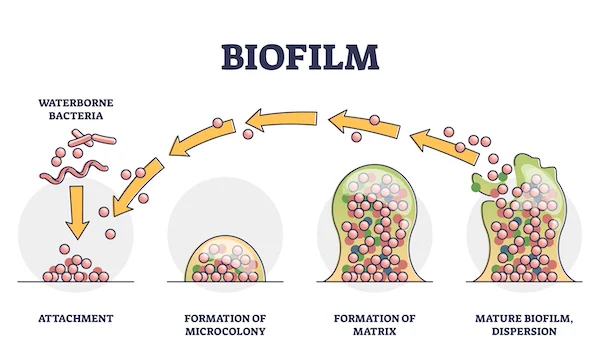
Image reference: puritanmedproducts.com
Why Biofilms Are a Serious Threat
1. Enhanced Resistance to Sanitizers
The EPS matrix acts as a physical and chemical barrier, reducing the penetration of sanitizers and disinfectants. As a result, standard cleaning protocols that eliminate planktonic bacteria may leave biofilms largely intact.
2. Persistent Source of Contamination
Biofilms can continuously release microorganisms into food products, leading to recurring contamination even after cleaning and sanitation.
3. Pathogen Survival and Growth
Foodborne pathogens such as Listeria monocytogenes, Salmonella spp., Escherichia coli, and Staphylococcus aureus are known to thrive within biofilms. In particular, Listeria biofilms in dairy and meat processing plants have been linked to major outbreaks.
4. Equipment Damage and Reduced Efficiency
Biofilms can corrode surfaces, block pipes, reduce heat transfer efficiency, and increase energy consumption, leading to higher operational costs.
Common Biofilm Hotspots in Food Processing Facilities
- Drains and floor cracks
- Conveyor belts and rollers
- Heat exchangers and pasteurizers
- Gaskets, valves, and seals
- Cutting boards and slicers
- Water lines and cooling systems
These areas are often difficult to clean thoroughly and retain moisture—ideal conditions for biofilm formation.
Limitations of Conventional Cleaning Methods
Traditional Clean-in-Place (CIP) and Sanitation-in-Place (SIP) systems are primarily designed to remove visible residues and planktonic microbes. However, biofilms require more targeted strategies because:
- Surface roughness protects microbial colonies
- Organic residues shield biofilms from chemicals
- Improper concentration or contact time reduces effectiveness
- Repeated sublethal exposure can promote resistance
This explains why facilities may pass routine hygiene checks yet still experience contamination incidents.
Strategies to Control and Prevent Biofilms
1. Hygienic Design of Equipment
Using smooth, corrosion-resistant materials and avoiding dead ends or crevices can significantly reduce biofilm formation.
2. Enhanced Cleaning Protocols
Alternating cleaning agents (alkaline, acidic, enzymatic) helps disrupt the biofilm matrix. Enzyme-based cleaners are particularly effective at breaking down EPS components.
3. Mechanical Action
Physical scrubbing, high-pressure sprays, and turbulent flow help dislodge biofilms that chemicals alone cannot remove.
4. Monitoring and Detection
Advanced techniques such as ATP bioluminescence, surface swabbing, and microbial mapping help identify biofilm-prone areas before contamination spreads.
5. Employee Training
Proper sanitation practices, awareness of biofilm risks, and adherence to cleaning schedules are critical in prevention.
6. Preventive Maintenance
Regular inspection and replacement of worn-out seals, gaskets, and hoses reduce microbial harborage sites.
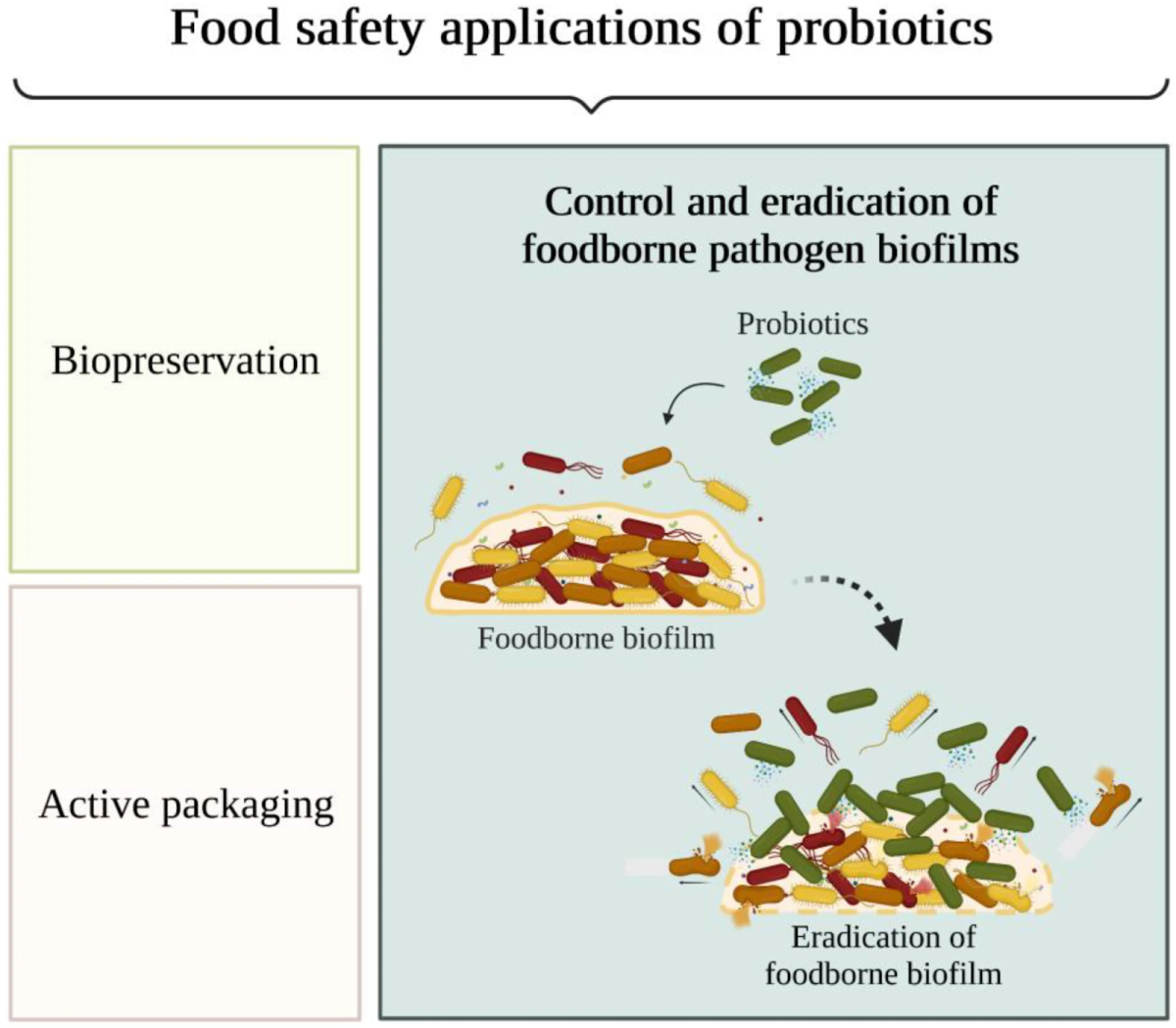
Image reference: www.mdpi.com
Regulatory and Food Safety Implications
Food safety standards such as HACCP, GMP, FSSAI regulations, ISO 22000, and BRC emphasize preventive controls and sanitation effectiveness. Failure to control biofilms can lead to non-compliance, product recalls, legal action, and severe reputational damage.
The Future of Biofilm Control
Emerging technologies such as antimicrobial surface coatings, bacteriophage treatments, and real-time microbial sensors show promise in combating biofilms. Research continues to explore innovative, sustainable solutions that enhance food safety without compromising environmental responsibility.
Conclusion
Biofilms represent a hidden but formidable challenge in food processing units. Their ability to resist sanitation, harbor pathogens, and cause persistent contamination makes them a critical food safety concern. By understanding the science of biofilms and implementing targeted prevention and control strategies, food processors can protect consumers, ensure regulatory compliance, and maintain product integrity. In the fight for food safety, addressing biofilms is not optional—it is essential.