
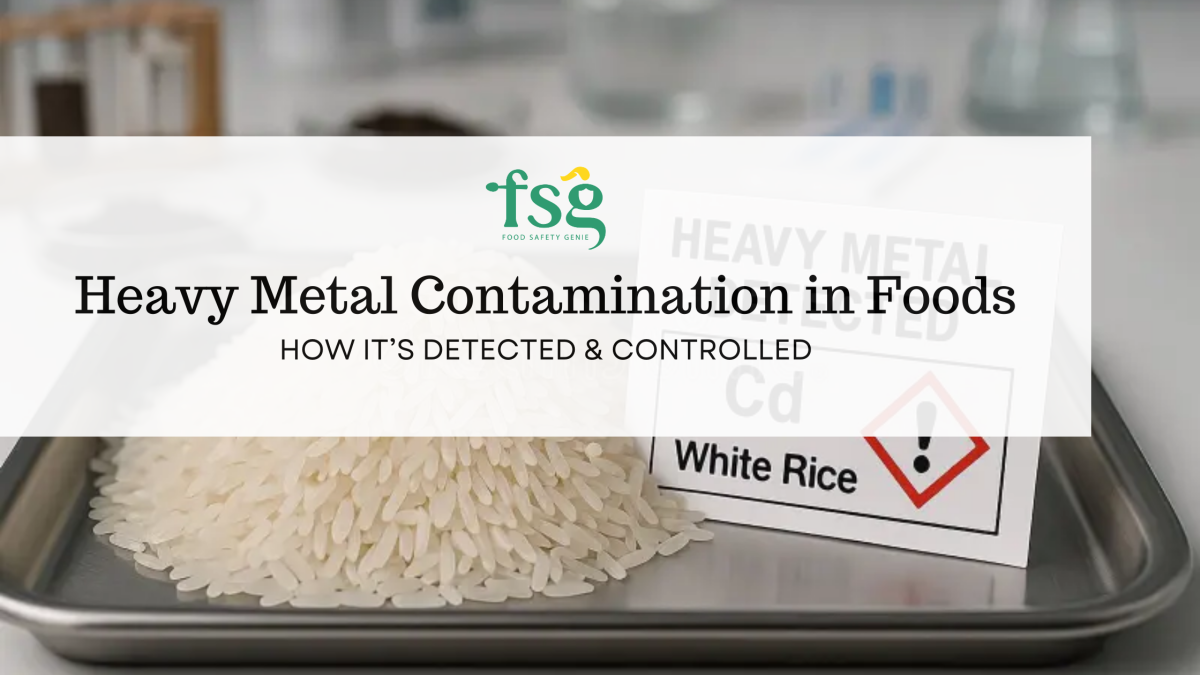
Heavy metal contamination in food has become a significant global food safety concern, and it is particularly relevant in rapidly industrializing countries like India. Metals such as lead, mercury, cadmium, and arsenic can enter the food chain through environmental pollution, agricultural practices, and food processing. Unlike many biological hazards, heavy metals do not degrade over time and can accumulate in the human body, posing serious long-term health risks.
In India, the Food Safety and Standards Authority of India (FSSAI) plays a central role in monitoring and regulating heavy metal contamination in foods.
Image Reference: www.globalfoodconsumers.org
What Are Heavy Metals in Food?
Heavy metals are naturally occurring elements with high atomic weight and density. Some are essential in trace amounts (like zinc and copper), but others are toxic even at very low concentrations.
Common Toxic Heavy Metals in Foods
- Lead (Pb) – Affects neurological development, especially in children
- Mercury (Hg) – Damages the nervous system and kidneys
- Cadmium (Cd) – Linked to kidney damage and bone weakness
- Arsenic (As) – Associated with cancer and skin lesions
These metals can accumulate in staple foods such as rice, seafood, leafy vegetables, spices, and processed baby foods.
Sources of Heavy Metal Contamination
1. Environmental Pollution
Industrial emissions, mining activities, battery recycling, and improper waste disposal release metals into air, soil, and water. Crops grown in contaminated soil can absorb these metals through their roots.
Indian context: Industrial belts and areas near e‑waste recycling hubs show higher soil contamination risks.
2. Irrigation with Contaminated Water
Using polluted groundwater or untreated wastewater for irrigation is a major pathway for arsenic and cadmium entry into crops, especially rice.
Indian concern: Arsenic-contaminated groundwater in parts of West Bengal, Bihar, and Assam has been widely reported.
3. Agricultural Inputs
- Phosphate fertilizers may contain cadmium
- Certain legacy pesticides contained arsenic or lead
- Sewage sludge used as manure may introduce metals
4. Food Processing and Packaging
- Metallic equipment corrosion
- Contaminated additives or colorants
- Low-quality packaging materials
- Lead-containing solder in traditional units (rare but still monitored)
5. Natural Geological Sources
Some regions naturally have high arsenic or mercury in soil and groundwater, making contamination difficult to avoid without treatment.
High-Risk Foods
Certain foods are more prone to heavy metal accumulation:
- Rice and rice products (inorganic arsenic risk)
- Fish and seafood (methylmercury in large predatory fish)
- Leafy vegetables grown near highways or industrial zones
- Spices (especially turmeric and chili powder) — occasional lead adulteration cases reported
- Infant foods and baby cereals — highly sensitive category
- Traditional sweets and candies — possible contamination from colorants or equipment
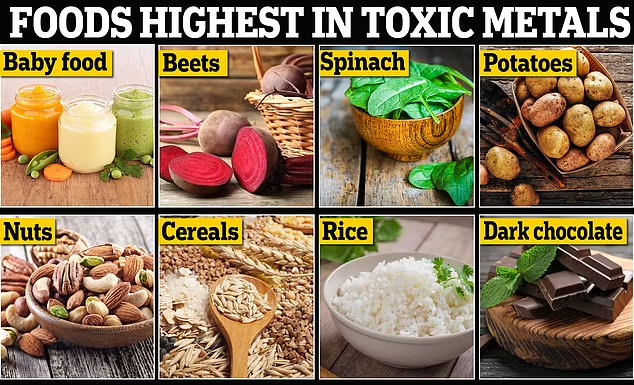
Image reference: www.dailymail.co.uk
Health Effects of Heavy Metal Exposure
Short-Term Effects
- Gastrointestinal distress
- Nausea and vomiting
- Acute poisoning (rare but possible in severe contamination)
Long-Term Effects
- Neurodevelopmental delays in children (lead, mercury)
- Kidney and liver damage (cadmium, mercury)
- Bone demineralization (cadmium)
- Increased cancer risk (arsenic)
- Cardiovascular problems
Because these metals bioaccumulate, even low-level chronic exposure is a major public health concern.
How Heavy Metals Are Detected in Foods
Modern food safety laboratories in India (including NABL-accredited labs) use highly sensitive analytical techniques.
1. Atomic Absorption Spectroscopy (AAS)
Principle: Measures absorption of light by free metal atoms.
Advantages:
- Relatively affordable
- Widely used in Indian state labs
- Suitable for single-element analysis
Limitations:
- Lower throughput
- Less sensitive than ICP-MS
2. Inductively Coupled Plasma Mass Spectrometry (ICP-MS)
Principle: Ionizes samples using plasma and detects metals by mass spectrometry.
Advantages:
- Extremely sensitive (ppb to ppt levels)
- Multi-element detection
- Gold standard for export testing and infant foods
Limitations:
- Expensive equipment
- Requires skilled analysts
Indian use: Major private labs and export-oriented facilities increasingly rely on ICP-MS.
3. ICP-OES (Optical Emission Spectroscopy)
Advantages:
- Multi-element capability
- Faster than AAS
- Moderate cost compared to ICP-MS
4. X-Ray Fluorescence (XRF)
Advantages:
- Rapid screening
- Portable field testing possible
- Useful for spice screening
Limitations:
- Lower sensitivity
- Usually requires confirmatory testing
5. Sample Preparation Techniques
Before analysis, foods typically undergo:
- Microwave digestion (most common in modern labs)
- Acid wet digestion
- Dry ashing (now less preferred)
Proper sample preparation is critical for accurate results and FSSAI compliance.
FSSAI Regulations on Heavy Metals
Legal Framework in India
Heavy metal limits in India are primarily governed under:
- Food Safety and Standards (Contaminants, Toxins and Residues) Regulations, 2011
- Subsequent amendments issued by FSSAI
Food business operators (FBOs) must ensure products comply with these limits before sale or import.
Key FSSAI Maximum Limits (Indicative)
Lead (Pb)
- Infant food: very stringent limits
- Spices: specific category-wise limits
- Drinking water and beverages: tightly regulated
Arsenic (As)
- Rice: limit specified for inorganic arsenic
- Drinking water and packaged water: strict limits
Mercury (Hg)
- Fish and seafood: species-dependent limits
Cadmium (Cd)
- Cereals and vegetables: defined maximum levels
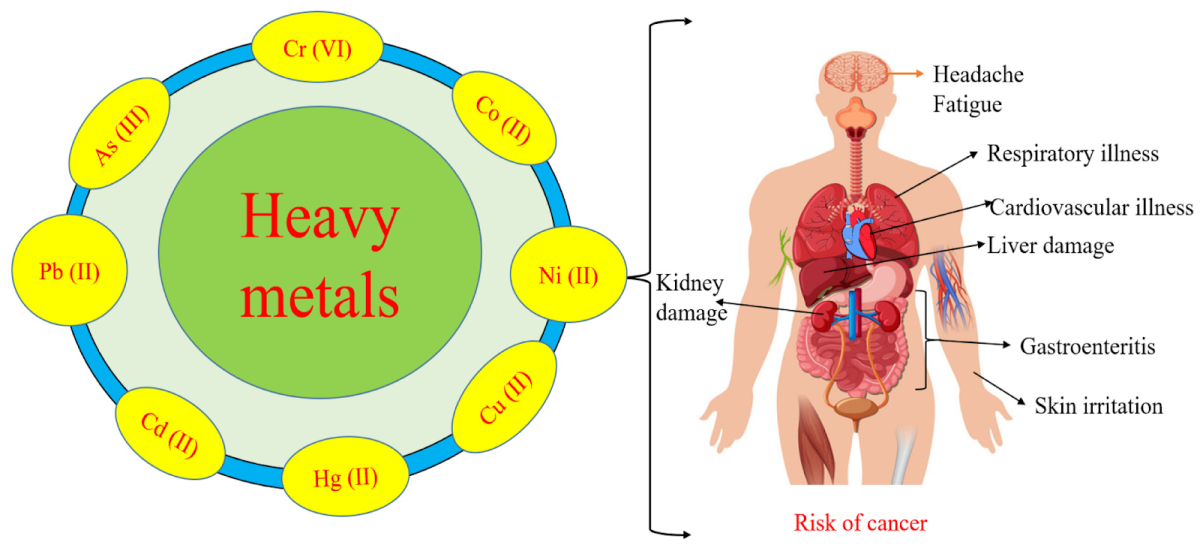
Image reference : www.arinsiredpencil.com
Minimum Mandatory Testing Requirement
For manufacturers and processors, FSSAI requires:
- At least one product sample every 6 months for each product category
- Testing must be conducted in an NABL-accredited or FSSAI-notified laboratory
This testing should include relevant chemical contaminants such as heavy metals when applicable.
Risk-based practice (recommended):
- High-risk foods (infant foods, spices, seafood, rice products): batch-wise or quarterly testing
- Medium-risk foods: every 6 months
- Low-risk foods: once per year
FSSAI Monitoring and Enforcement
FSSAI uses a multi-layered surveillance system:
1. State Food Safety Departments
- Routine market sampling
- Surveillance drives
- Enforcement actions
2. Central Surveillance
- National Food Safety Surveillance Plan
- Risk-based sampling of high-risk foods
3. Import Control
- Mandatory testing for certain high-risk imports
- Port-of-entry sampling
4. Product Recalls
If heavy metals exceed limits:
- Product recall may be initiated
- License suspension possible
- Penalties under Food Safety and Standards Act
How Food Businesses Can Control Heavy Metals
1. Supplier Approval Program
- Source from verified vendors
- Obtain Certificates of Analysis (CoA)
- Conduct periodic verification testing
2. Raw Material Risk Assessment
High priority ingredients in India:
- Rice flour
- Turmeric
- Chili powder
- Leafy vegetable powders
- Seafood
3. HACCP Implementation
Under FSSAI’s Food Safety Management System (FSMS):
- Identify heavy metals as chemical hazards
- Establish control measures
- Define testing frequency
- Maintain records
4. Environmental Monitoring
- Test irrigation water (for primary producers)
- Test soil in high-risk regions
- Monitor processing water
5. Equipment and Packaging Controls
- Use food-grade stainless steel
- Avoid lead-containing solder
- Verify packaging compliance
6. Periodic Laboratory Testing
Best practice in India:
- High-risk products: every batch or quarterly
- Medium risk: half-yearly
- Low risk: annually
Emerging Trends in India
Increased Focus on Infant Foods
FSSAI has tightened scrutiny on:
- Baby cereals
- Milk powders
- Nutritional supplements
Spice Safety Initiatives
Due to past lead-adulteration incidents, spices are under stronger surveillance.
Expansion of NABL-Accredited Labs
India is rapidly expanding accredited testing capacity, improving nationwide monitoring.
Risk-Based Inspections
FSSAI is moving toward data-driven, risk-based food surveillance.
What Consumers in India Can Do
- Wash vegetables thoroughly
- Prefer reputed brands for spices
- Avoid brightly colored non-branded turmeric or chili
- Follow fish consumption advisories
- Use safe drinking and cooking water
- Maintain a varied diet
For rice: rinsing and cooking in excess water can modestly reduce arsenic levels.
Conclusion
Heavy metal contamination in foods is a persistent but controllable food safety challenge. In India, FSSAI has established a strong regulatory framework supported by laboratory surveillance and risk-based monitoring. With advanced detection technologies such as ICP-MS, robust supplier controls, and strict adherence to FSSAI regulations, food businesses can effectively manage this chemical hazard.
Continuous vigilance—from farm to fork—remains essential. Collaboration among farmers, food manufacturers, laboratories, regulators, and consumers is the key to minimizing exposure and ensuring a safer food supply for India’s growing population.