
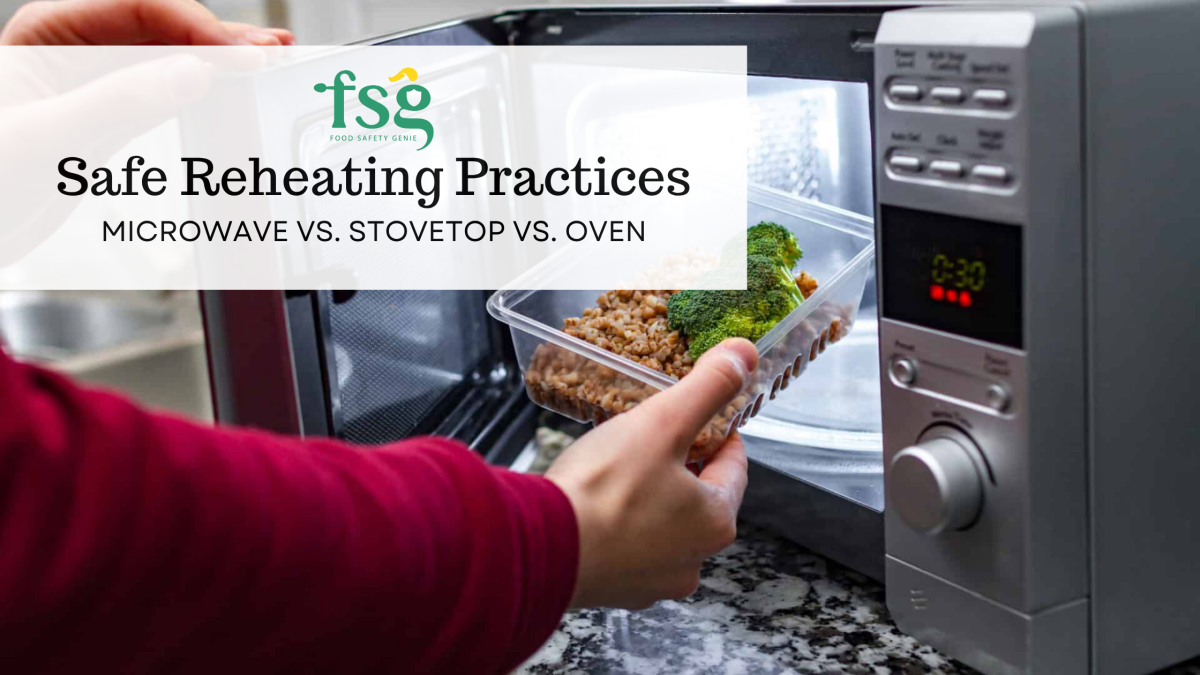
In today’s fast-paced world, leftovers are a convenient and economical way to reduce food waste and simplify meal planning. However, how you reheat your food matters—not just for taste and texture, but more importantly, for safety. Improper reheating can lead to uneven temperatures, promoting the growth of harmful bacteria such as Listeria monocytogenes and Salmonella. Understanding the strengths and limitations of common reheating methods—microwave, stovetop, and oven—can help ensure your meals are both delicious and safe to eat.

Image Reference : www.theuglykitchen.com
1. Microwave: Quick and Convenient, but Handle with Care
Pros:
- Fast and energy-efficient
- Ideal for single servings
- Minimal cleanup required
Safety Tips:
- Stir frequently: Microwaves heat unevenly. Stirring during reheating helps distribute heat more evenly, reducing cold spots where bacteria can survive.
- Use microwave-safe containers: Avoid plastic containers not labeled microwave-safe, as they may release harmful chemicals into food.
- Cover food: Use a microwave-safe lid or wrap to trap steam and promote even heating.
- Check internal temperature: Ensure food reaches an internal temperature of 165°F (74°C). Use a food thermometer for accuracy.
- Let it rest: Allow microwaved food to stand for a minute or two post-heating. This helps equalize temperature throughout the dish.

Image Reference : www.cookist.com
2. Stovetop: Control and Precision
Pros:
- Excellent for soups, stews, sauces, and sautéed dishes
- More control over heat levels
- Can enhance flavors through gentle simmering
Safety Tips:
- Heat evenly: Stir regularly, especially for thick dishes like chili or curry.
- Use the right pan size: Too small, and food may overcrowd and heat unevenly. Too large, and food may dry out.
- Low and slow for best results: Reheat slowly over medium heat to avoid burning or uneven heating.
- Always verify temperature: As with other methods, aim for 165°F (74°C) throughout.

Image Reference : www.storables.com
3. Oven: Best for Baked Goods and Larger Dishes
Pros:
- Retains texture, especially for baked or roasted items
- Suitable for casseroles, lasagna, and roasted meats
- Avoids sogginess common with microwaves
Safety Tips:
- Preheat the oven: Always preheat to ensure consistent heating.
- Use oven-safe containers: Glass, metal, and ceramic are good options—avoid plastic.
- Cover with foil: This helps retain moisture and heat food evenly.
- Low to moderate temperatures: Reheat at 325–350°F (160–175°C) until the internal temperature hits 165°F.
- Watch for drying out: Add a splash of water or broth and cover to prevent dryness in items like rice or meats.

Image Reference : www.bhg.com
Don’ts of Reheating
- Don’t Reheat Food More Than Once
Repeated reheating increases the risk of bacterial growth and reduces food quality.
- Don’t Reheat Food Unevenly
Especially in microwaves—cold spots can harbor bacteria. Stir food midway for even heating. - Don’t Use Unsafe Containers
Avoid plastic containers that aren’t microwave-safe; they may leach harmful chemicals. - Don’t Reheat in Styrofoam or Aluminum
Styrofoam can melt and release toxins; aluminum is unsafe in microwaves. - Don’t Reheat Frozen Food Without Thawing (When Required)
Some foods need to be thawed first for even cooking and safety. - Don’t Reheat High-Risk Foods Carelessly
Foods like rice, poultry, or seafood need to be reheated thoroughly to kill harmful bacteria. - Don’t Leave Reheated Food Out for Too Long
Consume immediately after reheating; bacteria multiply quickly at room temperature. - Don’t Reheat Food Without Checking Temperature
Ensure it reaches at least 74°C (165°F) throughout to be safe for consumption.
Conclusion
The best reheating method depends on the food type and your priorities—speed, texture, or flavor. Regardless of the method, the golden rule remains: Reheat to an internal temperature of 165°F (74°C) to ensure your food is safe to eat. Investing in a reliable food thermometer is one of the simplest and most effective ways to protect yourself and your family from foodborne illness. Stay safe—and enjoy your leftovers with confidence!