
The Food Safety and Standards Authority of India (FSSAI) license is a mandatory requirement for all food-related businesses operating in India. It ensures that food products meet safety standards and provides credibility to the business.
Image Reference : www.taxfillingindia.com
What is an FSSAI License?
The FSSAI license is issued by the FSSAI under the Ministry of Health & Family Welfare, Government of India. It is mandatory for all food business operators (FBOs) involved in the manufacturing, processing, storage, distribution, and sale of food products.
Types of FSSAI Licenses
- Basic Registration:
- For small businesses or startups with an annual turnover of less than ₹12 lakh.
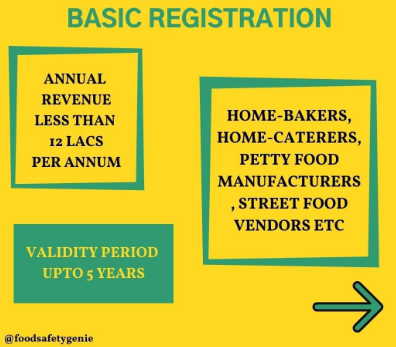
- State License:
- For medium-sized businesses with an annual turnover between ₹12 lakh and ₹20 crore.
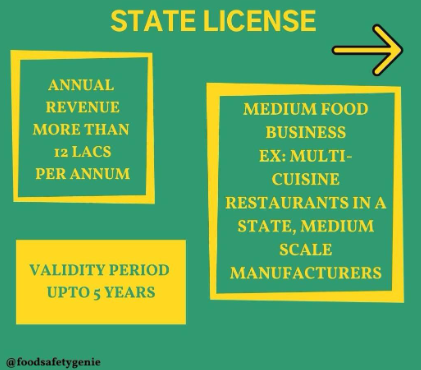
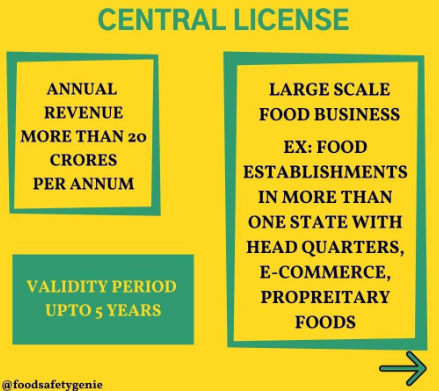
- Central License:
- For large-scale businesses with an annual turnover above ₹20 crore or those operating across multiple states.
Fee Structure
The FSSAI license fee varies based on the type of license:
- Basic Registration: ₹100 per year
- State License: ₹2000 per year
- Central License: ₹7,500 per year
Procedure to Apply for an FSSAI License
Step 1: Determine the Type of License
- Assess your business’s turnover, scale, and operations to identify whether you need a Basic Registration, State License, or Central License.
Step 2: Gather Required Documents
- Basic Registration:
- Address proof of the business.
- Identity proof of the FBO.
- Passport-sized photograph.
- Fostac certificate
- State and Central License:
- Form B (completed and signed).
- Blueprint or layout of the processing unit.
- List of equipment and machinery.
- List of food products to be manufactured.
- Water analysis report.
- Proof of possession of premises (rent agreement or ownership deed).
- Partnership deed or certificate of incorporation.
- Form- IX and board resolution
- Fostac certificate
- Medical certificate for food handlers
- Pest control certificate
- NOC from the local municipality.
- Import-export code (for Central License).
Step 3: Fill Out the Application Form
- Access the online FSSAI portal (https://foscos.fssai.gov.in).
- Register and create an account.
- Choose the appropriate form:
- Form A: For Basic Registration.
- Form B: For State and Central Licenses.
- Fill in details about your business, upload the required documents, and pay the application fee.
Step 4: Submit the Application
- Submit the application online and save the acknowledgment.
Step 5: Inspection and Verification
- An FSSAI official will inspect the premises for compliance with safety standards.
Step 6: Issuance of License
- If all requirements are met, the license will be issued within 30-60 days.
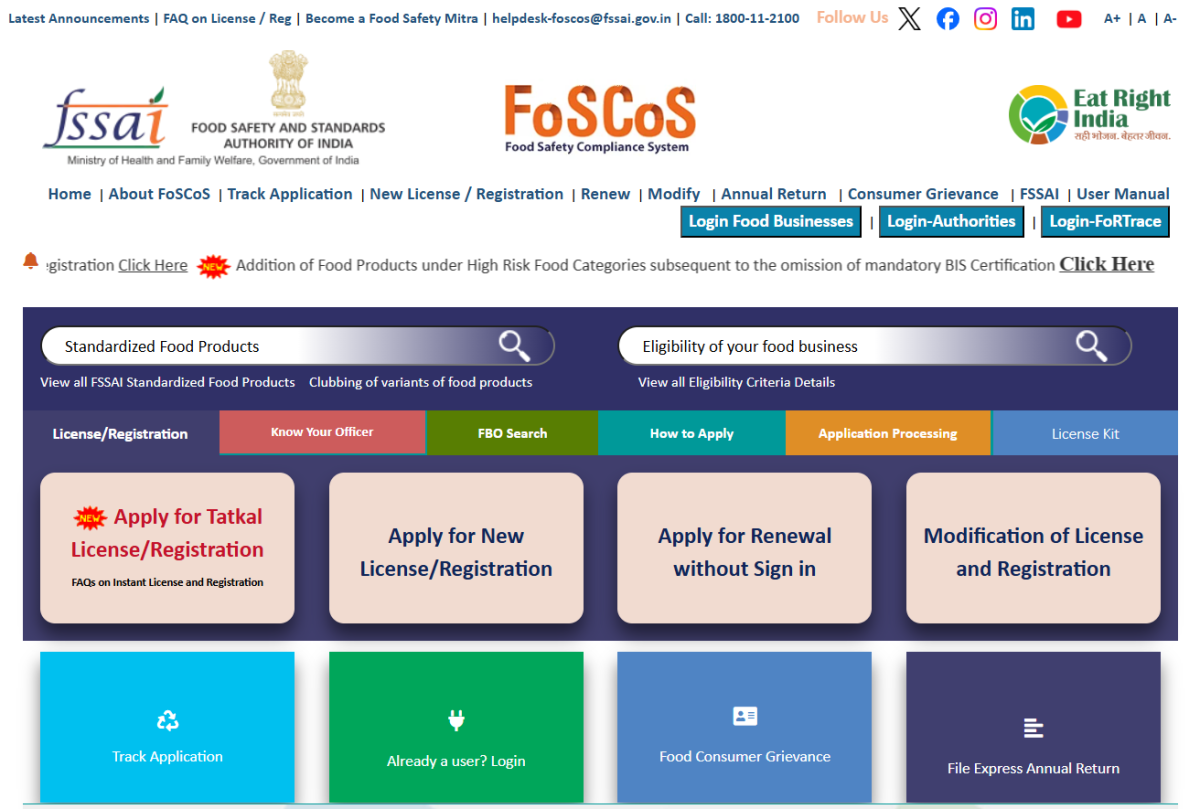
Image Reference : www.foscos.fssai.gov.in
Stages and Process of the Application
- Application Submission: Submit the online application with supporting documents.
- Scrutiny of Application: FSSAI scrutinizes the application for accuracy and completeness.
- Inspection: Officials inspect the premises to ensure compliance with regulations.
- Approval or Rejection: The application is either approved and a license is issued or rejected with reasons.
Benefits of FSSAI License
- Consumer Trust: Establishes credibility and trust among consumers.
- Legal Advantage: Avoids penalties for non-compliance.
- Expansion Opportunities: Facilitates business expansion and licensing across states.
- Regulatory Standards: Ensures adherence to food safety standards.
Penalties for Non-Compliance
- Operating without an FSSAI license can result in penalties up to ₹10 lakh and/or imprisonment.
- Non-compliance with safety regulations can lead to suspension or cancellation of the license.
Food Safety Digital Mitra
Food Safety Digital Mitra is an innovative initiative by the Food Safety and Standards Authority of India (FSSAI) to promote food safety awareness and digital compliance among small and medium food businesses. Under this program, Digital Mitras are trained and certified to assist food businesses in adopting FSSAI’s online systems, such as licensing, registration, and food safety compliance. These trained individuals provide hands-on guidance in navigating digital platforms, ensuring that businesses meet regulatory requirements efficiently. The program aims to bridge the gap between food businesses and regulatory authorities, fostering a culture of accountability, transparency, and adherence to food safety standards in India.

Image Reference : www.fssai.com
Conclusion
Obtaining an FSSAI license is essential for ensuring food safety and building a trustworthy brand. By understanding the application process, required documentation, and compliance standards, food business operators can navigate the licensing process efficiently and ensure the smooth operation of their businesses.